
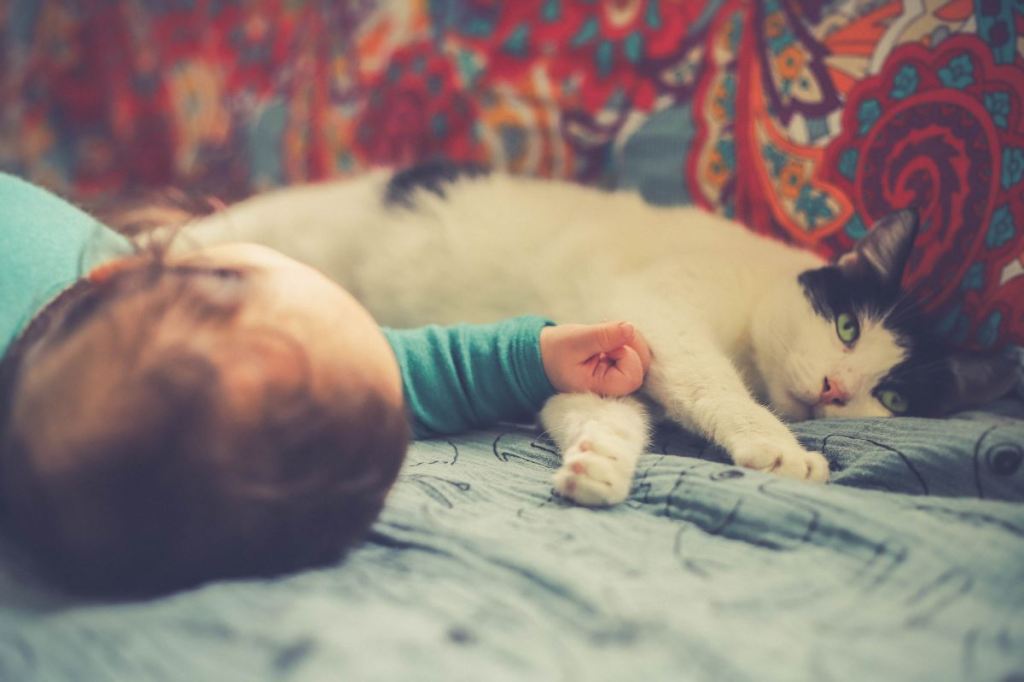
Raising Cats and Dogs in a Home with a Baby: An In-Depth Examination and Comprehensive Guide
Bringing a cat or dog into a home with a baby adds a unique dimension to family dynamics. Pets can contribute positively to a baby’s development by offering love, joy, and companionship. However, the responsibilities and important considerations that come with this situation should not be overlooked. In this article, we will examine all aspects of raising pets in a home with a baby in depth, providing you with a comprehensive guide.
Multidimensional Contributions of Pets to Baby Development
- Strengthening the Immune System and Enriching the Microbiome:
- Interaction with pets during childhood can help strengthen the immune system and enrich the microbiome. Pet dander, saliva, and feces contain various microorganisms. Exposure to these microorganisms can contribute to the early education of the immune system and increase resistance to diseases such as allergies and asthma.
- However, caution should be exercised in this regard, and utmost care should be taken with pet hygiene. Regular veterinary check-ups, vaccinations, and parasite prevention practices are vital to protect the health of both the pet and the baby.
- Emotional, Social, and Cognitive Development:
- Pets help children develop empathy, compassion, responsibility, and social skills. Caring for animals teaches children the ability to understand and meet the needs of others.
- In addition, pets can also develop children’s social skills. Interaction with animals increases children’s communication, relationship-building, and emotional expression skills.
- Studies show that pets can also contribute to children’s cognitive development. Interaction with animals can improve children’s attention, focus, and problem-solving skills.
- Physical Activity, Play, and Motor Skill Development:
- Dogs, in particular, encourage children to go outdoors, engage in physical activity, and socialize. This contributes to children’s healthy growth, reduces the risk of obesity, and develops motor skills.
- Cats also enjoy playing and enjoy interacting with children. Play helps children develop motor skills, hand-eye coordination, and imagination.
- Friendship, Trust, and Emotional Support:
- Pets can be reliable friends and confidants for children. Especially for lonely, shy, or emotionally sensitive children, pets can provide unconditional love, acceptance, and emotional support.
- Pets increase children’s self-confidence, reduce their anxiety, and develop their emotional regulation skills.
Challenges and Critical Considerations of Raising Pets in a Home with a Baby
- Hygiene and Health Risks:
- It is vital that pets’ vaccinations are complete and parasite checks are carried out regularly. This is necessary to protect the health of both the animal and the baby.
- Utmost care should be taken to clean animal hair, saliva, and feces. In particular, the cleanliness of areas where the baby crawls, plays, or sleeps is very important.
- Attention should also be paid to the hygiene of pet food and water bowls.
- Allergy and Asthma Risks:
- It may be helpful to have an allergy test before or after birth to check whether the baby is allergic to pet dander, saliva, or urine.
- Allergy symptoms include skin rashes, sneezing, runny nose, watery eyes, coughing, and shortness of breath. If these symptoms are noticed, a doctor should be consulted.
- Babies with a family history of allergies or asthma are at higher risk of pets.
- Safety and Behavioral Risks:
- Care should be taken to ensure that the pet does not exhibit any aggressive or unwanted behavior towards the baby. In particular, the animal’s access to areas where the baby sleeps or plays should be kept under control.
- The animal’s nails should be trimmed regularly, and care should be taken if it has sharp teeth.
- It is very important that large breed dogs or cat breeds with high hunting instincts are not left alone with the baby.
- Training, Socialization, and Appropriate Behavior Modification:
- It is important that the pet is trained on how to behave towards the baby. The animal should be taught not to harm the baby’s belongings, not to disturb the baby, and not to exhibit unwanted behaviors.
- It is important that the animal is accustomed to interacting with the baby and is socialized. This ensures that the animal is calmer, more harmonious, and safer towards the baby.
- If necessary, unwanted animal behaviors should be corrected by seeking help from an animal behavior specialist.
- Supervision, Control, and Baby Safety:
- The baby and pet should never be left alone. In particular, the baby’s access to the animal’s food, water, or toilet should be prevented.
- Care should be taken to ensure that the baby does not disturb, harm, or frighten the animal. Behaviors such as babies pulling animals’ tails, pulling their ears, pulling their fur, or climbing on them should be prevented.
- During babies’ crawling, walking, and exploration periods, pets’ toys, food, toilets, and other belongings should be kept out of the baby’s reach.
Practical Tips and Suggestions to Facilitate the Process of Raising Pets in a Home with a Baby
- Pre-Birth Preparation and Acclimation:
- As the baby’s birth approaches, take time to acclimate the pet to the baby’s scent, sound, and belongings.
- Before allowing the pet to enter the baby’s room, make sure the room is clean, safe, and tidy.
- To accustom the pet to interacting with the baby, play recordings of baby sounds or have them play with baby toys.
- First Introduction and Gradual Interaction:
- The baby and pet’s first introduction should be calm, controlled, and short-lived. Allow the animal to smell, recognize, and observe the baby.
- Always supervise the baby and animal’s interactions and intervene in any negative situation.
- Gradually increase interactions and reward the animal’s positive behaviors towards the baby.
- Regular Care, Hygiene, and Health Checks:
- Trim the pet’s nails regularly, brush their fur, brush their teeth, and clean their ears.
- Clean and disinfect the animal’s bed, food bowl, water bowl, and toilet regularly.
- Do not neglect the pet’s vaccinations, parasite prevention practices, and veterinary check-ups.

 Milkoholic Baby
Leave a comment